
Understanding Urine Analyzers
A urine analyzer is a medical device designed to analyze urine samples quickly and accurately. By reading urine test strips automatically, it helps healthcare professionals obtain reliable test results while improving laboratory efficiency.
Urine analyzers are widely used in hospitals, clinical laboratories, health screening centers, and diagnostic clinics. They can detect multiple urine parameters, including glucose, protein, ketones, blood, pH, leukocytes, nitrite, and specific gravity, providing valuable information for routine health screening and disease diagnosis.
Compared with manual interpretation, a urine analyzer offers several advantages:
Fast and consistent results
Reduced human error
Easy operation
Improved laboratory workflow
Automatic result storage and printing (depending on the model)
When choosing a urine analyzer, laboratories should consider factors such as testing speed, ease of use, data management, and compatibility with urine test strips.
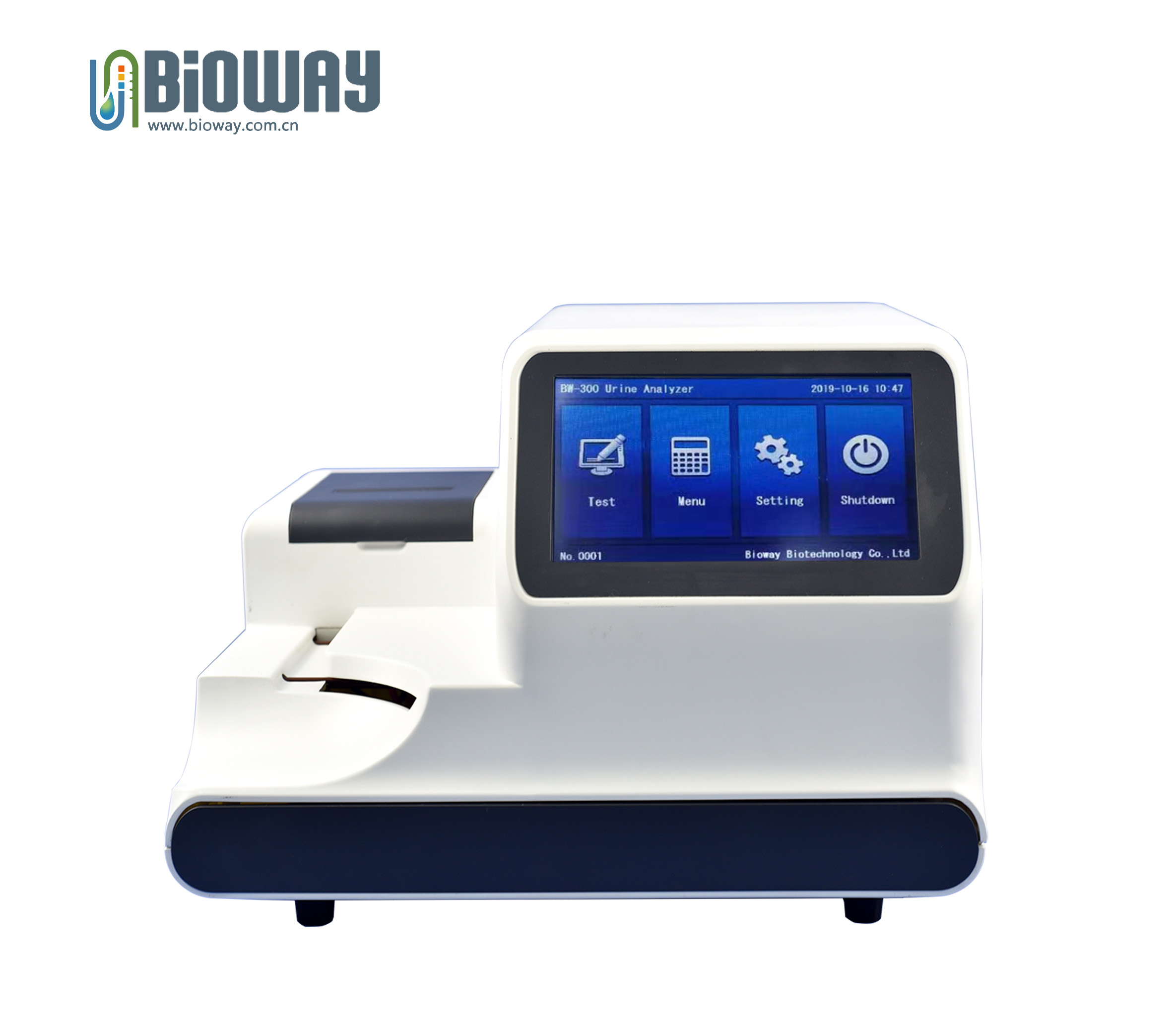
The BIOWAY BW-300 Urine Analyzer is designed to provide accurate and efficient urinalysis for routine laboratory testing, helping healthcare professionals improve productivity and deliver reliable results. https://www.bioway.com.cn/en/products/bw-300
Define the scope: urine chemistry and formed elements
In human clinical urinalysis, reagent-strip chemistry and the examination of formed elements provide different information. Color changes on reagent pads are used for the corresponding chemical tests. Cells, crystals and casts require an appropriate microscopy or formed-element analysis method. The name "urine analyzer" alone does not establish that a device performs both. Check the applicable instrument and strip instructions for the available tests, specimen requirements and intended use.
Build result review into the laboratory workflow
Urinalysis can support routine screening and clinical assessment, but an isolated abnormal finding does not establish a diagnosis. Food and medicines may also affect urine color. Laboratories should verify specimen identity, collection information and the available clinical context, then follow their procedures when deciding on repeat or further testing. A qualified clinician interprets the findings with symptoms, history and other investigations. Patients should not stop medication or change treatment on the basis of a single urine result.
Evaluate the complete process when selecting equipment
In addition to stated instrument throughput, consider manual steps, compatible strips, specimen traceability, result review and data-transfer needs. List urine chemistry and formed-element requirements separately before choosing standalone equipment, sequential testing or a combined workflow. Confirm every proposed function against the documentation for the particular product.
Medical background: MedlinePlus: Urinalysis. This general information does not replace product instructions or clinical diagnosis.